uMod is the current name for the Rust plugin framework. Older Rust guides and some panels may still use the old Oxide name, but for modern Rust servers you should treat that as uMod unless the plugin author says otherwise. Install uMod before adding most plugins, then reinstall it after major Rust updates if plugins stop loading.
- Open your Rust server in the control panel.
- Click Mod Manager.
- Expand Mods, then install the panel option for Oxide / UMod. The panel label includes the old Oxide name, but this is the uMod framework used by Rust plugins.
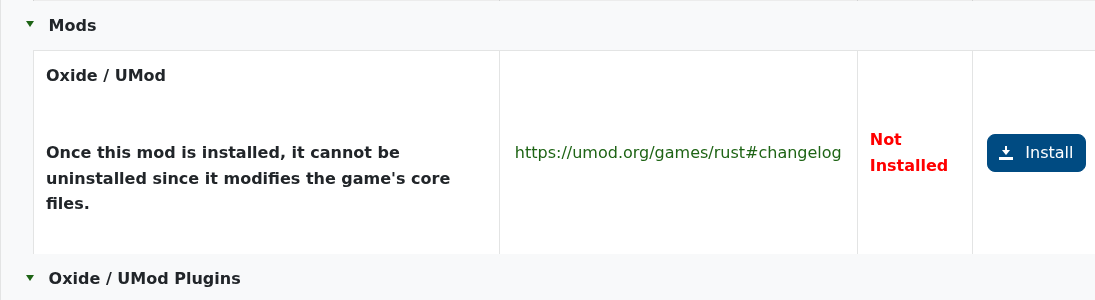
- Wait for the install task to finish.
- Restart the server and check Web Console for uMod load messages.
If a plugin guide says Oxide, treat it as uMod unless the plugin author says otherwise. Do not install multiple framework versions at the same time; keep to the panel's Oxide / UMod install option.